
Playbooks, Not Prompts
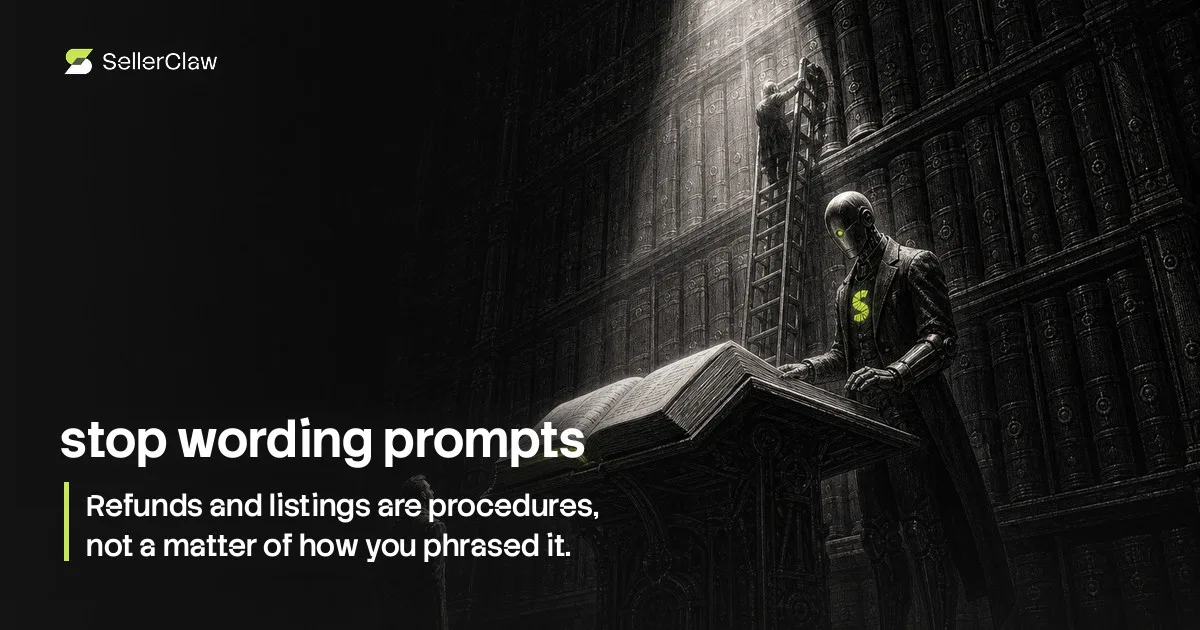
The uncomfortable truth about most AI tools is that output quality depends on how well you phrase the request. Ask casually, get something casual. That's fine for a first draft and useless for work that has a right answer.
Handling a refund, launching a campaign, publishing a listing to eBay — these aren't creative tasks. They're procedures with steps, checks and a definition of done. They shouldn't depend on your wording on a Friday afternoon.
A skill is a written procedure
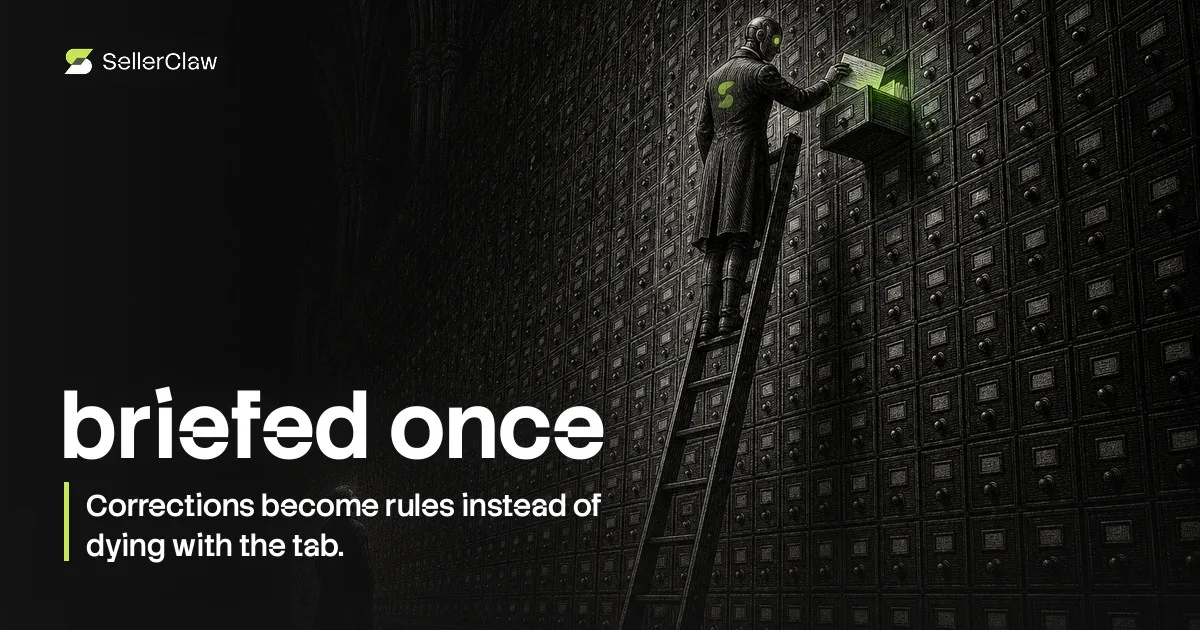
Each card is a procedure the agent follows, not a hint it might consider.
SellerClaw — a team of AI agents connected to your stores, suppliers and ad accounts, run from a chat — ships with a library of these, split across the specialists that use them.
They read like a job description rather than magic. Order pipeline: tracks orders through the fulfillment pipeline. Source products: finds products to sell from supplier catalogs. Supplier purchasing: places and tracks purchases with suppliers. Listing optimization report: turns listing analysis into a ready-to-publish rewrite for you to review. Campaign report: summarizes a prepared ad campaign for your approval before launch.
The agents use them automatically. You don't pick a skill from a menu — you ask for the outcome, and the relevant procedure is what happens next.
Why this matters more than model quality
Two things go wrong with unscripted AI work, and a procedure fixes both.
It forgets steps that aren't in the request. Asked to "publish this to eBay", a model produces a listing; a procedure also checks the item specifics, the category, the policy fields and the stock count, because they're in the checklist.
And it varies. The same request on Monday and Thursday gives you two different shapes of answer. A procedure makes the shape stable, which is what makes the output reviewable at a glance.
Your own procedures, written by describing them
The built-in set covers the common jobs. Your business has jobs that aren't common.
You describe the procedure in plain language — how you handle a supplier complaint, what your listing quality bar is, the exact way you want products checked before publishing — and it's written up as a skill your team follows from then on. No syntax, no prompt engineering; the phrasing you'd use to train a new hire.
That's also the honest boundary of "custom AI" here: you're not tuning a model, you're writing down a procedure. It's less impressive and considerably more useful. And a skill doesn't grant access — a procedure that says "check the supplier's price" needs a connected supplier, and without one it stops and tells you rather than inventing the number.
What changes for you
Quality stops being a function of how carefully you typed. The refund gets handled the same way whether you asked politely at 9am or curtly at 11pm, and the parts you care about are checked because they're in the procedure rather than in your memory.
Not everything is scripted — where no playbook fits, the agent works it out from the request, the way any tool does. But the recurring jobs, the ones with a right answer, stop being improvised.
Start free and ask for something ordinary — "optimize this listing" — then read what comes back. The shape of the answer is the procedure showing.
Keep reading
Connect one store and see what your agent says about it.
Start for Free